
Your shopping cart


Description
Tech Specs
Downloads
Related Products
More Media
Reviews
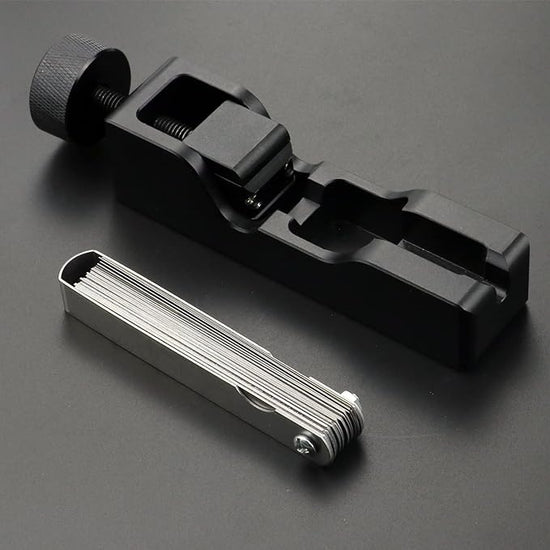
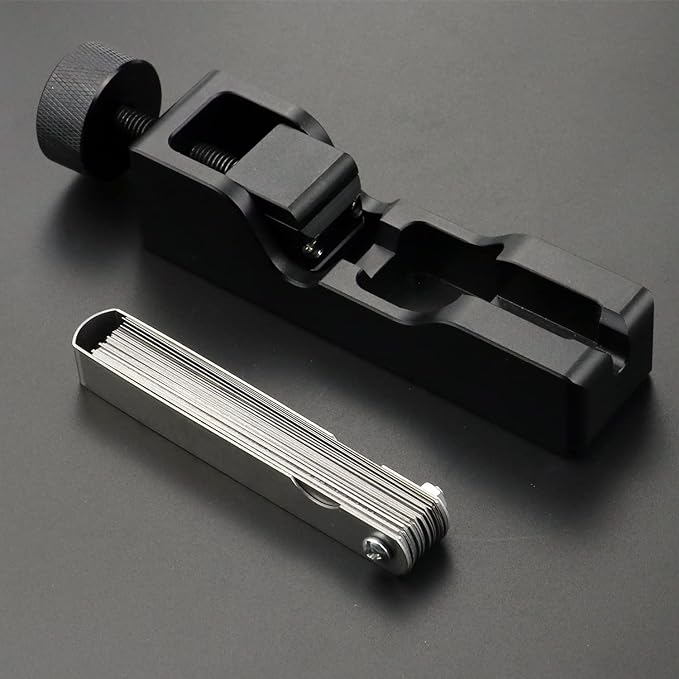
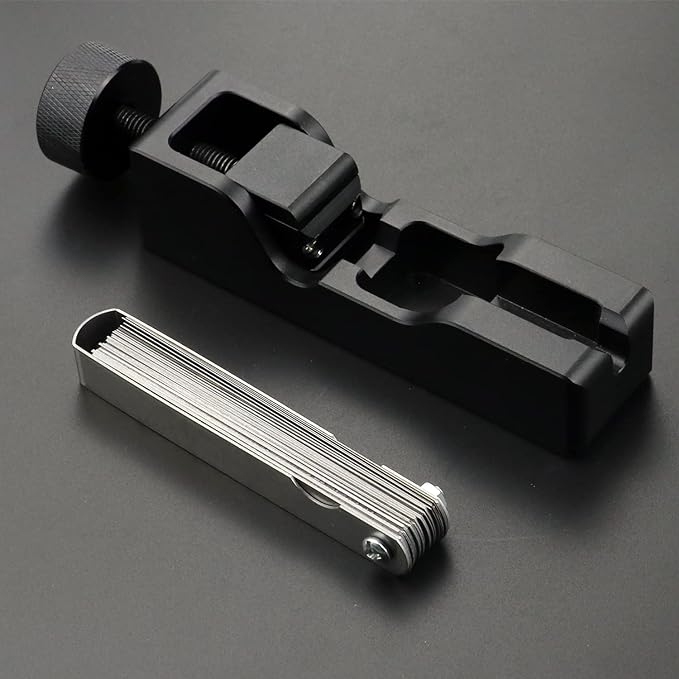
The Universal Spark Plug Gap Tool with Feeler Gauge is the perfect addition to your tool box and essential when gapping spark plugs for performance. Properly gapped spark plugs are critical for a well tuned car; too much gap can blow away the spark and too little gap can waste it.
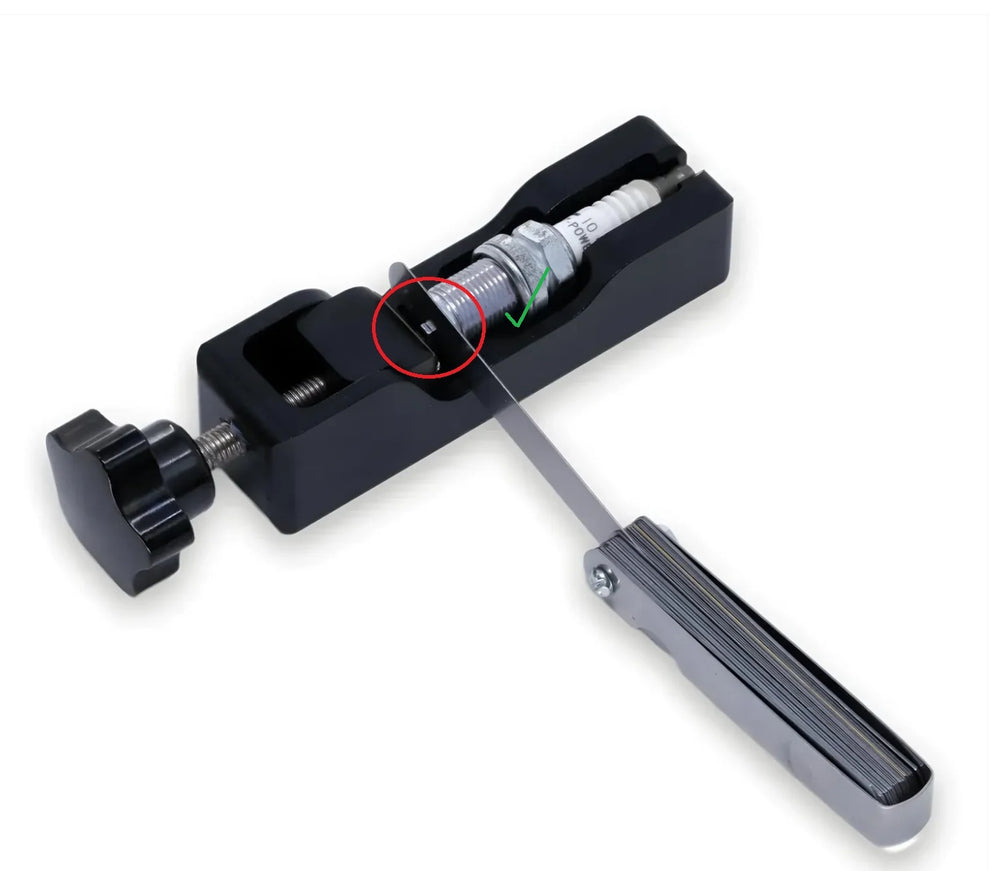
Gapping a spark plug with this tool is simple - just place the spark plug in the gap tool and turn the knob with the appropriately-sized feeler gauge in place until the side electrode is compressed to the required gap thickness.
It's important to note that some spark plugs may have a ground strap that springs back, which is normal. To achieve a gap target of 0.44mm, it is recommended to use a 0.42mm feeler gauge - this way, when the electrode springs back, it will rest at the desired gap thickness.
The Universal Spark Plug Gap Tool with Feeler Gauge provides dual markings for both metric and imperial measurements, ranging from 0.0015"/0.04mm to 0.035"/0.88mm.
Spark Plug Pro Tips:
- Supercharged vehicle - Use RIPP specified gap .032
- Non-supercharged vehicle - Use factory-specified gap .044 - .045
- Service spark plugs every 30,000 miles.
- Check the Spark plug gap! Never install a spark plug without first checking the gap and carefully adjusting if necessary.
- *Check if your vehicle has gasket or tapper seat spark plugs. RIPP plugs are all Gasket seat.
- Ruthenium Plugs have a platinum-tipped ground strap! Carefully gap with proper feeler or proper gapping tools.
- Iridium / Ruthenium spark plugs have delicate center electrode(s). When gapping, use high-quality gapping tools and feeler gauges. If using a traditional plug gapper, avoid contact with the electrodes at all times. Manipulate the plug's ground strap only!
- Checking gaps on old plugs that have been removed is commonly overlooked. Recording gap size on an old plug will help determine how often plugs require service. (as plugs wear, the gap will increase in size)
- Inspect plugs for hairline cracks and damage before installation. Plugs can be mishandled, dropped, and damaged. Carefully inspect a plug's electrode, porcelain, and ceramic portion.
- Apply Anti-seize compound to spark plug threads.
- Apply dielectric grease to coil pack/spark plug wire boot.
- Always tighten to the manufacturer's recommended torque spec.
-
Coloration: The color of the insulator nose and electrodes can indicate if an engine is operating smoothly or requires some adjustments.
- Deposits: Examining deposits on the spark plug can reveal information about the fuel and oil consumption. Reading an older plug removed from an engine can play a crucial roll in engine health!
No downloads to show
No media to show